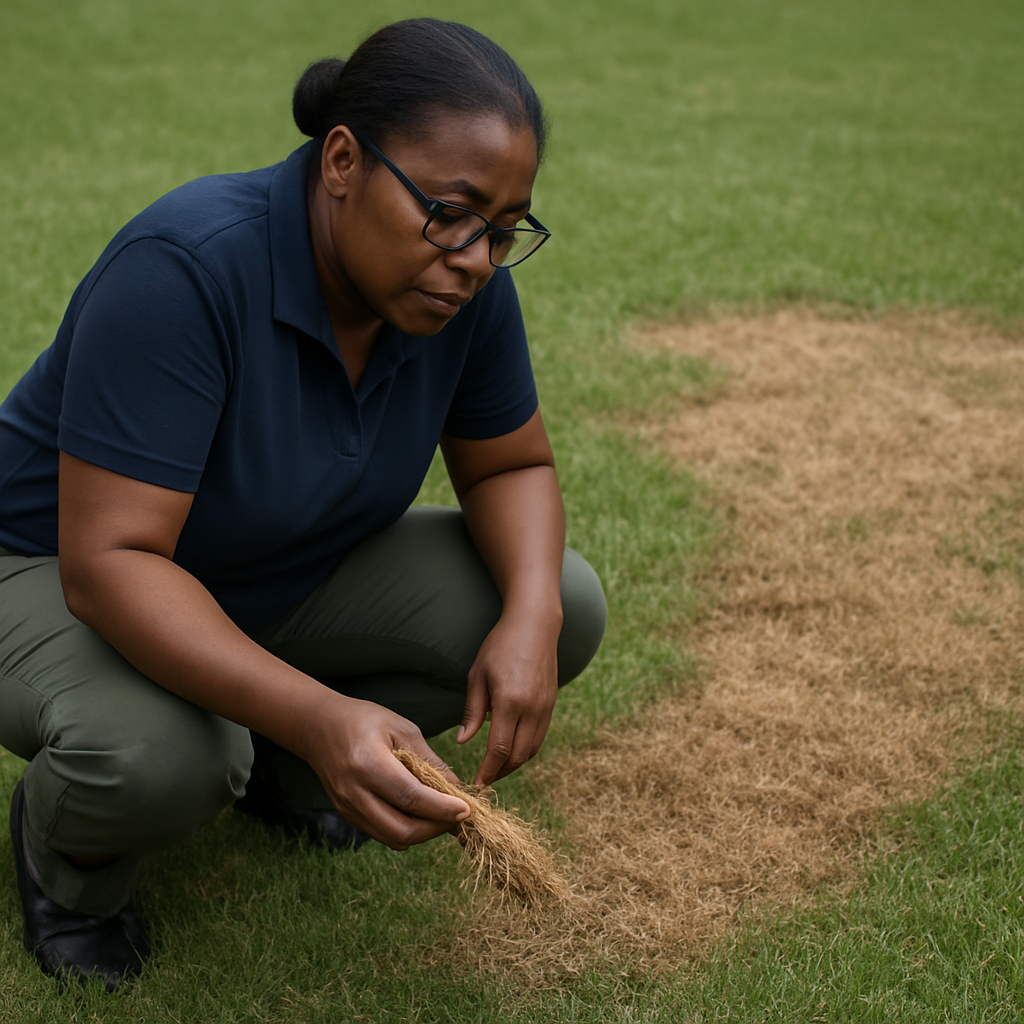
If you notice irregular brown patches with a yellow smoke ring on your zoysia lawn, you are likely facing large brown patch—a common fungal issue that threatens the health and appearance of zoysiagrass. The fungus responsible, Rhizoctonia solani, damages grass by creating circular dead spots, particularly during warm, humid weather. Early recognition and diagnosis are key, as prompt management can help restore your lawn to its green, vibrant state.
Symptoms of Brown Patch Disease in Zoysia
The most characteristic sign of large brown patch is the appearance of circular areas of brown and wilted grass surrounded by a yellowish smoke ring. Inside this ring, you may notice grass blades that easily detach from their stolons because the disease attacks the leaf sheath base. Newly infected areas begin as small, water-soaked circles that quickly become light brown and expand as the fungus progresses. Despite obvious above-ground damage, stolons often remain green, making the problem less noticeable at first glance. In severe cases, multiple rings may merge, resulting in larger, irregular brown areas. For in-depth descriptions and photographs, see the Missouri Botanical Garden's overview of large brown patch.
It is also important to distinguish disease symptoms from normal seasonal dormancy. Zoysia grass naturally turns uniformly brown when soil temperatures fall below 55°F, but if you see only isolated areas or detect a musty odor, disease is likely present.
Noticing the easy separation of leaves from the stolons, and irregular brown shapes, helps to confirm brown patch disease rather than simple dormancy or stress. Typical environmental triggers include prolonged humidity, excessive nitrogen fertilizer, and poor air circulation.
Causes and Life Cycle of Rhizoctonia
Large brown patch in zoysia is triggered by the fungal pathogen Rhizoctonia solani. This organism thrives when night temperatures remain above 60°F and during prolonged periods of leaf wetness. Such conditions are commonly met in late spring and early fall, particularly if lawns receive frequent irrigation or rainfall.
The fungus can infect at any turfgrass stage, from seedlings to mature stands, and spreads rapidly under high moisture and thatch. It survives in the soil and thatch during dormant periods, reactivating when conditions improve. Multiple Rhizoctonia species can co-exist in a single lawn, increasing disease complexity.
Improper mowing, excessive overlapping of leaf blades, and heavy traffic also raise susceptibility to infection. Management practices that encourage good air flow and quick drying of leaf surfaces help reduce fungal activity.
It is critical to recognize the difference between true disease and seasonal dormancy, as improper identification may lead to wasted treatments. Uniform browning in winter is almost always non-pathogenic dormancy, not a disease process.
Diagnosis and Identifying Confounding Factors
Visual inspection is often sufficient for initial diagnosis. Key clues include irregular, ring-shaped brown patches, smoke rings, and grass that easily separates from stolons. To confirm, examine the area closely after periods of humid or rainy weather and look for signs of leaf wilting and sheath rot inside the patch perimeter.
Cultivar, mowing height, and lawn management all influence symptom severity and presentation. More than one type of fungus can be active at the same time, further complicating symptoms. Laboratory analysis may be needed in difficult cases.
Watch for secondary indicators like a musty odor or dark lesions on blades, which rule out simple winter dormancy. For comprehensive diagnosis tips, refer to the guidance at the Missouri Botanical Garden.
Incorrect fertilizer timing—especially late-summer nitrogen applications—can worsen the disease risk and symptoms, so always adjust fertilization based on lawn needs and recent weather conditions.
Effective Prevention Strategies for Zoysia Lawn Health
The best way to manage large brown patch is prevention, using a combination of sound horticultural practices. Water only in early morning hours to allow grass leaves to dry quickly. Avoid heavy irrigation and water deeply but infrequently to promote deep root systems.
Reduce thatch buildup by dethatching when layers exceed half an inch; this limits the fungus' primary habitat. Choose zoysia cultivars with known disease resistance wherever possible, and mow regularly at recommended heights to discourage excess moisture retention in the lower canopy.
Control fertilizer use—especially nitrogen—by applying only during active growth and never in late summer or fall. Aerating compacted soils and encouraging good air circulation further decreases risk. Learn more about differentiating dormant zoysia from diseased patches at ZoysiaPlug.
Maintain consistent, season-appropriate care throughout the year to build resilience and reduce the likelihood of significant outbreaks during high-risk periods.
Removing or trimming back overhanging vegetation helps increase sunlight penetration and speeds up leaf drying, reducing conducive environments for the fungus.
Treatment and Restoration for Active Brown Patch
If large brown patch is already present, act swiftly to mitigate damage. Begin by reducing irrigation and eliminating nighttime watering. Remove excessive thatch and use fungicides labeled for brown patch on zoysiagrass, applying according to manufacturer directions and local regulations.
Post-outbreak, reseed or replug damaged sections as needed once conditions favor new growth. Ongoing monitoring and cultural controls are essential to prevent future outbreaks. Avoid using the same treatment repeatedly to prevent fungus resistance.
Consult with a local turfgrass expert if patches spread or fail to heal despite careful intervention. Consistent follow-up and modification of care practices are paramount for long-term recovery and prevention.
With attentive observation, prompt response, and proper lawn management, zoysia lawns suffering from large brown patch can be restored to their lush, healthy state.
Comments
Post a Comment