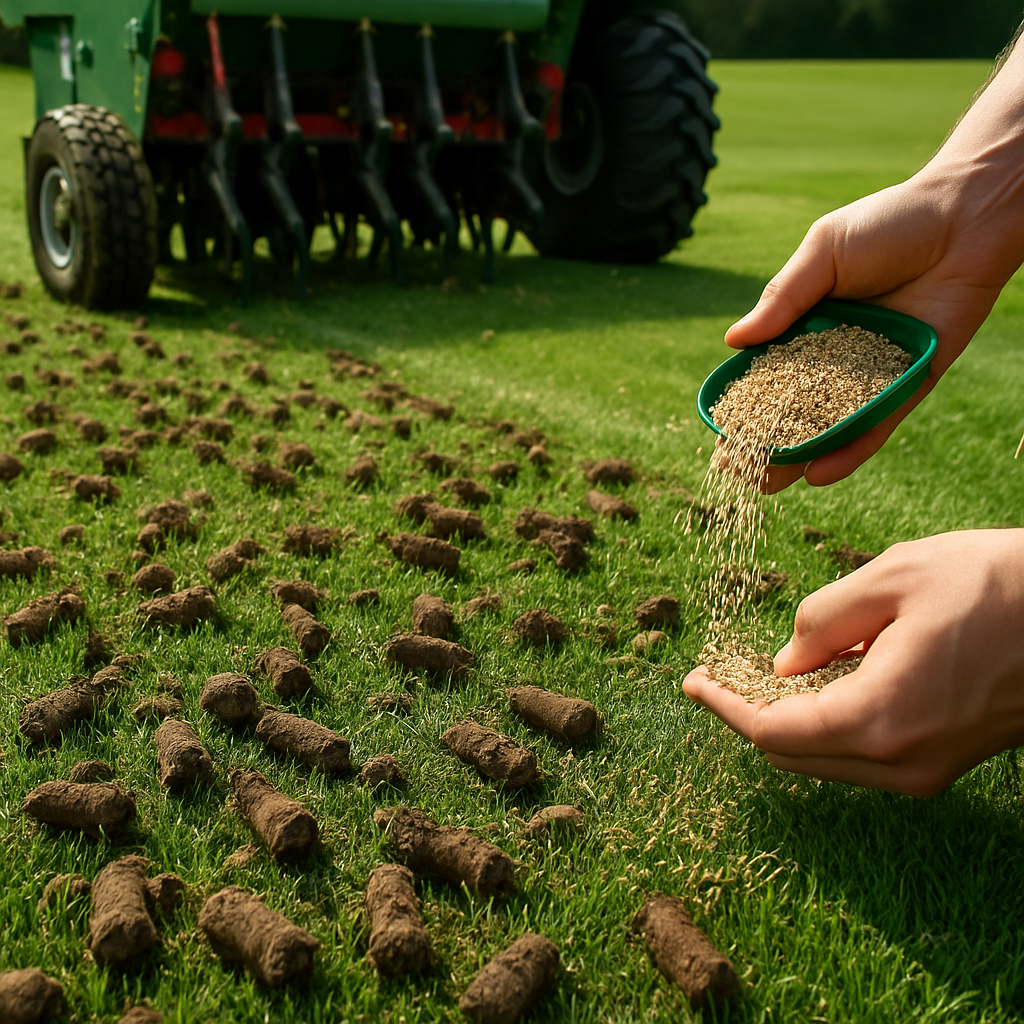
For homeowners seeking a healthier, more resilient lawn, the combination of core aeration and overseeding provides immediate and long-lasting upgrades to both soil permeability and a yard’s ability to buffer stresses such as drought, heat, and heavy foot traffic. This proactive double process dramatically improves water infiltration, root oxygenation, and nutrient uptake, ensuring grass can withstand environmental pressures better throughout the growing season. By understanding the science behind permeability diagrams and stress-buffering capacity, you can maximize the benefits of this targeted approach in your own landscape. [source]
Understanding Soil Permeability and its Impact on Lawn Health
Soil permeability describes how easily water, air, and nutrients travel through the ground to the plant roots. Compacted soils, often the result of regular use or clay-heavy compositions, significantly restrict this movement, leading to shallow root systems and heightened vulnerability to drought or erosion. Increasing permeability ensures grass roots can access moisture even during dry spells, drawing vital resources deeper from the soil profile.
Mechanical charting and permeability diagrams reveal that aerated lawns display a higher volumetric moisture infiltration rate, which is central to sustaining turf health. Core aeration physically removes small plugs (cores) of soil, opening up pathways for improved flow. This alleviates compaction, improves capillary rise, and supports lateral seepage mechanics, essential for moisture to evenly reach every blade of grass.
Using an auger or hydraulic probe to assess your lawn’s permeability can help identify zones most in need of intervention. By scheduling aeration at the optimal time, you align soil amendment processes with the turf’s natural growth cycles, allowing for more effective overseeding and nutrient uptake.
A properly aerated and seeded lawn acts as a living, breathing system. Pore respiration and root zone air exchange are enhanced, reducing the chance of disease and promoting an ecosystem rich in beneficial microorganisms.
How Core Removal Techniques Increase Stress Buffering Capacity
The concept of stress buffering capacity refers to how well a lawn absorbs and recovers from external pressures, like temperature extremes or heavy use. When the soil is dense, plant roots cannot penetrate deeply, and the lawn's capacity to buffer stress is reduced.
With regular core aeration, supported by overseeding, turfgrass gains the structural foundation for better stress dispersion. The soil matrix becomes less anisotropic, meaning it exhibits more uniform behavior against stress gradients caused by weather swings or mechanical disturbance. A well-aerated lawn can rapidly move water through its drainage system, mitigating pooling or runoff problems on sloped areas.
This practice boosts the lawn’s buffering capacity in several ways:
- Deeper root development enabled by easy passage through loosened soil
- Improved lateral seepage and drainage, which helps in periods of excess rainfall
- Heightened ability to regulate moisture during drought conditions due to an improved capillary rise system
Recent studies showcase that integrating soil aeration and overseeding expands the efficacy of the lawn as an environmental buffer, directly linking grass vitality with infiltration rate tables and mechanics. [source]
Integrating Overseeding for Enhanced Plant Performance
While core aeration lays the groundwork, overseeding introduces hardier, more disease-resistant grass varieties into the system. These new seeds take root in the freshly opened channels, utilizing the augmented permeability to sprout more quickly and robustly than in compacted conditions.
When combined, the two techniques reinforce the buffering capacity of the lawn. Overseeding into newly aerated soils ensures optimal seed-to-soil contact, increasing germination success and resulting in denser turf cover. This, in turn, reduces bare spots—major sources of soil erosion and infiltration inconsistencies.
The process of adding seed in conjunction with amendments like npk fertilizer (nitrogen, phosphorus, potassium), capillary irrigation, or even suspension erosion controls maximizes the effectiveness of each intervention. As grass coverage increases, plants further stabilize soil aggregates, and the reinforcing feedback loop of health and resilience continues to build.
Timing and Maintenance: Maximizing Function for Sustained Benefits
Success with core aeration and overseeding relies on proper scheduling and periodic soil analysis. Early fall or spring is typically recommended for cool-season grasses, when natural root growth is most active. Warm-season lawns benefit most from late spring implementation.
Periodic use of permeability meters and follow-up drainage experiments can confirm whether amendments are increasing infiltration and root development as intended. Consider regular assessments using simple volumetric infiltration rate tables or more advanced devices when plotting your annual maintenance calendar.
Seasonal climate stressors—such as extreme heat, drought, compaction from outdoor activities, or insect activity—demand strategic timing. Aligning overseeding and aeration cycles with these stresses, and supplementing with buffered suspension treatments, ensures your lawn stays vigorous and environmentally adaptive. Lawn care professionals can perform hydraulic probe analysis and provide slurry reactor treatments to speed remediation and neutralization if needed.
The combined use of these processes will keep your landscape functioning as a resilient ecosystem, with measurable improvements in infiltration, drainage flow, and mechanical stability observable year after year.
Conclusion
Integrating core aeration with overseeding is the most effective way to enhance both the permeability and stress buffering capacity of your lawn. This simple but strategic approach transforms even the most compacted, stressed yards into vibrant, lush landscapes that withstand seasonal and environmental challenges. For a full plan and step-by-step guidance on implementing these impactful techniques, visit reputable sources like naturalawn.com and lawndoctor.com.
Comments
Post a Comment