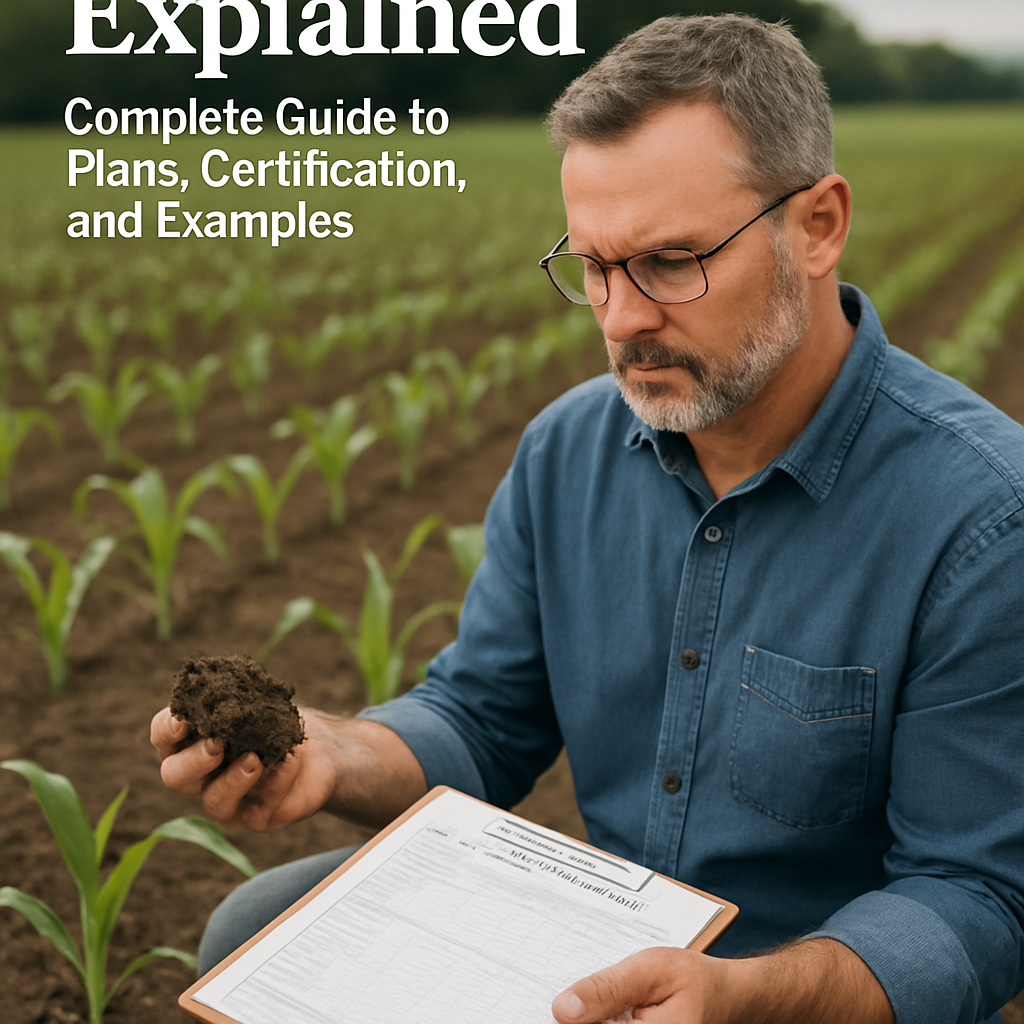
Nutrient management is the practice of optimizing the use of crop nutrients to achieve the best possible yields while safeguarding the environment and conserving resources. At its core, nutrient management is about ensuring that the nutrients applied to fields—such as nitrogen, phosphorus, and potassium—are supplied in precise quantities and at the right times to match the needs of crops. This minimizes waste, reduces input costs, and prevents nutrient runoff, which can contaminate surface and groundwater. Effective nutrient management plans, certifications, and real-world examples illustrate not only how to boost productivity, but also how to meet regulatory and environmental standards (source).
Understanding the Basics of Nutrient Planning
Nutrient planning begins with a thorough assessment of both soil properties and crop needs. By conducting soil tests, producers can determine which essential elements are present and which are deficient. This information forms the basis for deciding when, where, and how much fertilizer or manure to apply.
The primary goal is to achieve equilibrium between nutrient inputs and crop uptake. Too little input limits yields, while excess leads to nutrient pollution—especially through leaching and runoff. Implementation of nutrient management planning is mandated by laws in various regions to ensure not just profitability for farmers, but also environmental stewardship (source).
Beyond soil testing, nutrient planning includes record-keeping, forecasting nutrient release from organic sources, and factoring in other sources such as irrigation water or crop residues. Comprehensive plans help producers align all nutrient sources with crop needs during each stage of growth.
Key Elements of a Nutrient Management Plan
An effective plan covers multiple core components:
- Inventory of Existing Nutrients: Identify what nutrients are already present in the soil or supplied by manure, compost, or cover crops.
- Cropping and Rotation Strategies: Document chosen crops, their nutrient requirements, and the role of crop sequencing in nutrient cycling.
- Application Timing and Methods: Specify optimal periods for applying nutrients to maximize plant uptake and minimize losses.
- Field Mapping and Site-Specific Management: Use maps to differentiate management zones, accounting for variable soil properties.
- Best Management Practices (BMPs): Integrate erosion control, buffer strips, and nutrient stabilizers to further limit environmental impacts.
All these elements must be documented for regulatory compliance and on-farm decision making. Plans often require approval by certified specialists and periodic review to ensure ongoing effectiveness (Ontario government resource).
Incorporating technologies like precision agriculture tools can make these plans even more effective by tailoring inputs to site-specific field conditions and crop variability.
Certification Programs and Training Requirements
Professional certification is an essential step for those wishing to implement or advise on nutrient management. In many jurisdictions, writing and approving plans requires certification under regionally recognized programs. Certification programs cover a broad range of competencies, including:
- Soil fertility fundamentals and interpretation of soil test results
- Nutrient application methods and timing based on weather, crop growth stages, and environmental risk factors
- Regulatory frameworks and recordkeeping requirements
- Environmental protection strategies and support for sustainable agriculture
Certified Nutrient Management Specialists are responsible for ensuring that plans comply with local regulation, prevent over-application, and effectively utilize available nutrient resources. Farmers can also undergo training to become certified themselves or to better understand plan implementation on their own operations.
Regular recertification and continuing education keep professionals updated on new technologies, best practices, and changes in legislation.
Many certification programs, such as those discussed by the Nutrient Management Institute of Ontario, involve both coursework and field components, reflecting the complexity and importance of the work.
Demonstrating Success: Practical Examples and Tools
Examples from farm operations highlight the practical benefits of robust nutrient management:
- A producer integrates manure and commercial fertilizers guided by annual soil tests, achieving higher crop yields without increased input costs.
- Using specialized software for nutrient management planning, a multi-crop farm reduces fertilizer over-application, leading to lower nutrient runoff and improved local water quality.
- A large-scale livestock operation develops a certified nutrient management plan that includes detailed record-keeping and onsite reviews by specialists, helping maintain compliance and access to state assistance programs.
Various tools—from nutrient management software and digital mapping to mobile applications—streamline recordkeeping, soil test management, and regulatory reporting.
Adopting precision agriculture, including variable rate nutrient application and GPS-tracked fieldwork, further enhances the efficiency and environmental responsibility of nutrient use.
Final Thoughts on Sustainable Nutrient Management
Optimized nutrient management is fundamental to modern agriculture, balancing economic productivity with environmental responsibility. Developing an informed plan, obtaining proper certification, and staying up to date with proven tools and regulatory requirements all contribute to more sustainable farming outcomes. Following evidence-based practices reduces waste, mitigates water contamination risks, and ensures healthy soils for future generations (learn more here).
Comments
Post a Comment