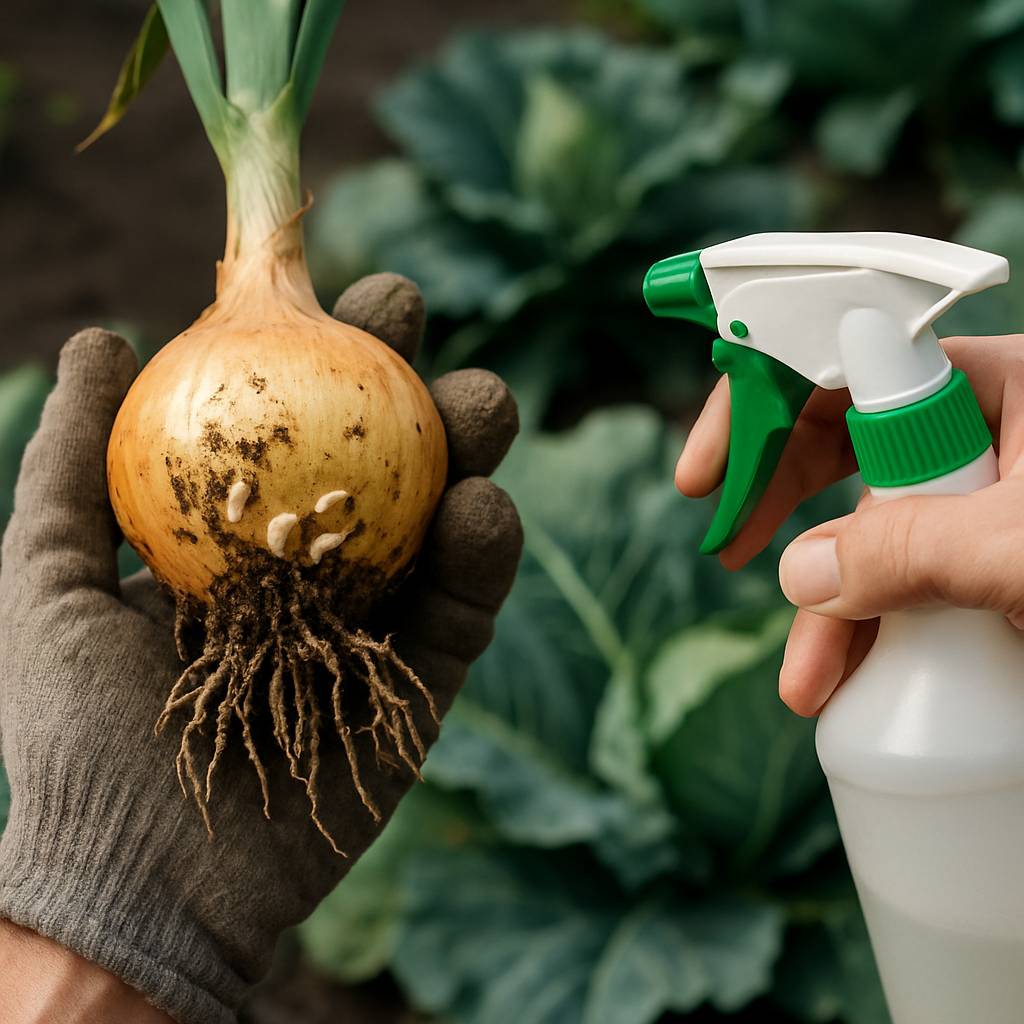
If you are seeking the best onion maggot control insecticide, especially targeting root larvae and brassica crops, recent research and field data offer clear direction. The most effective solution currently involves targeted insecticide seed treatments alongside integrated management strategies. The primary products available to onion growers—such as Sepresto and Farmore FI500—deliver excellent protection against onion maggot eggs, larvae, and related pests, helping to preserve crop yield and quality when applied correctly.
Understanding the Threat: Onion Maggot and Root Larvae
Onion maggot infestations begin with the adult fly laying eggs near the base of young onion plants. Soon after hatching, the larvae burrow into onion bulbs and roots, causing significant damage and sometimes total plant loss. The problem extends to similar root pests in brassica families and can also affect radishes and related crops. As onion maggots can develop resistance rapidly, finding reliable and effective insecticides is vital for continued production and soil health.
The impact is further compounded when root larvae target not only onions but also neighboring crops in rotation, such as cabbage. This makes it essential for growers to have a control method that adapts to a variety of root-targeting pests. In fields where the pest pressure is high, onion maggot infestations can coincide with the presence of pepper maggot and cabbage fly, intensifying the management challenge.
Understanding maggot biology, egg-laying periods, and their preferred hosts is the first step to timing applications of the appropriate control products, making monitoring an integral component of any integrated management plan.
Leading Insecticide Seed Treatments for Onion Maggot Control
Among available options, seed treatments have become the most effective and widely adopted method of controlling onion maggots from the beginning of the season. Sepresto and Farmore FI500 are currently the leading commercial seed treatments recommended for onion maggot suppression, each combining insecticidal and fungicidal properties to deliver comprehensive protection. Regent (fipronil) is also cited as one of the most effective products in efficacy trials.
Farmore FI500 stands out due to its broad labeling for all onion varieties and consistent results. For specialized varieties, Sepresto offers similar control but is restricted to Nunhem’s onions. In comparative trials conducted in New York, both treatments demonstrated high efficacy in reducing onion maggot injury, especially when integrated with resistance management strategies outlined in extension recommendations.
It is also notable that these seed treatments can provide collateral suppression of other soil-dwelling pests, such as seedcorn maggots, in rotated radish or brassica stands, adding value to integrated brassica treatment programs. However, none of the current insecticides fully eliminate maggot threats unless accompanied by best management practices and crop monitoring.
Use of these seed-applied insecticides, in concert with proper agronomic techniques and regular monitoring of adult maggot populations, delivers superior results in real-world field conditions. Many growers report improved stand establishment, healthier roots, and minimized replanting costs when these treatments are consistently used.
Integrating Chemical Classes and Preventing Resistance
Resistance management is paramount for ensuring the longevity of these effective insecticides. Chemical companies have shown limited interest in developing new maggot control options, making stewardship of the available seed treatments a top priority. Experts recommend yearly rotation among registered insecticide classes on all acreage, regardless of crop. For instance, alternating between Sepresto, Farmore FI500, and the use of granular diazinon provides a rotation that can slow resistance development in onion maggot populations as detailed in the literature from Cornell University.
This approach is further supported by integrating non-chemical tactics, such as crop rotation, delayed planting, and controlling maggot host weeds around field edges. Only when such resistance management strategies are observed can the efficacy of onion maggot control insecticide programs be maintained over the long term.
For situations where non-onion maggot pests such as cabbage fly or rat-tailed maggot become problematic, it is vital to confirm the spectrum of control for the selected insecticide, adjusting your treatment choices accordingly. This level of vigilance helps maintain the effectiveness of primary seed treatments in onion and brassica systems.
Consulting with regional extension guides or the PNW pest management handbook can help tailor these strategies to your specific variety, pest complex, and field conditions, further improving results across pepper, radish, and cabbage crops.
Complementary Control Measures for Brassica and Cabbage Fly
Non-chemical methods are increasingly emphasized for their ability to reduce dependence on insecticides, especially as resistance threatens available products. Sanitation practices such as removing cull onions and crop debris, using row covers to block adult flies, and optimizing planting time can significantly lower maggot and root larvae populations across onion, radish, and brassica crops.
For cabbage fly management, combining insecticide seed treatments with early intervention strategies, such as in-furrow applications of alternate chemistry (e.g., Lorsban with Trigard), can help protect young seedlings at their most vulnerable stage. Where seedcorn maggot or radish root larvae also pose risks, rotating crops and applying targeted insecticides only as needed make economic and ecological sense.
Additionally, scouting for eggs around vulnerable plants provides the lead time required to act before larval feeding begins. Maintaining robust, healthy plants through good fertility and irrigation practices further helps plants withstand modest feeding pressure, limiting loss even when minor infestations occur.
Integrated programs that combine these cultural, chemical, and biological tactics offer the most robust and environmentally sound protection for root crops, especially as insecticide options tighten and market demands grow for residue-free produce.
Summary: The Current Best Practice for Onion Maggot and Root Pest Control
Combining insecticide seed treatments like Sepresto and Farmore FI500 with resistance management and integrated field strategies remains the best approach for onion maggot and allied root pest control. These products, when used thoughtfully in multi-year rotation with other tools and attentive cultural practices, deliver the highest probability of season-long success. For up-to-date guidance and evolving recommendations, always consult current extension materials and regional pest management handbooks. Tackling root maggots, cabbage fly, and related larvae with an integrated plan protects both your yields and the longevity of your critical control products.
Comments
Post a Comment