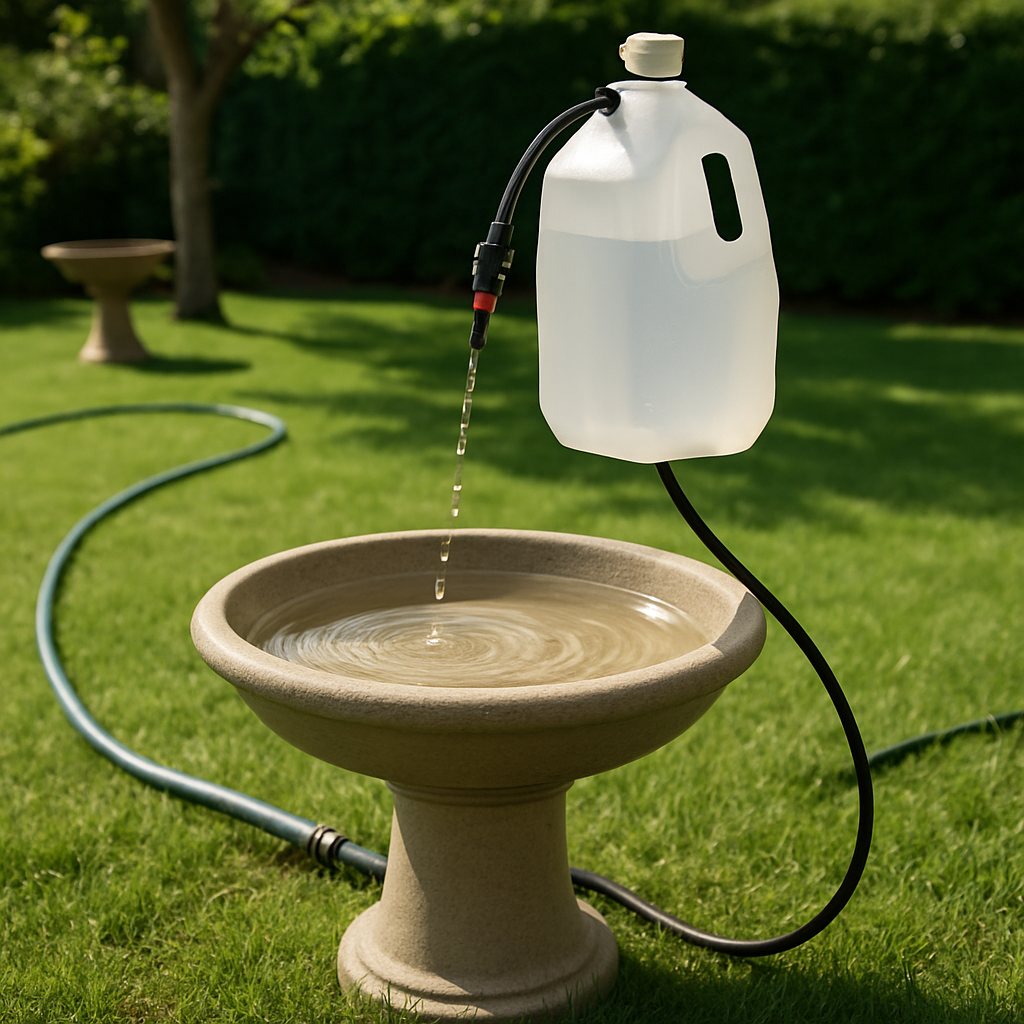
If you want to attract more birds to your garden while keeping their bathing water fresh, making your own bird bath dripper is simple and inexpensive. By using common household items and understanding water flow, you can construct an effective dripper system that entices songbirds and water birds while minimizing water evaporation. Here’s exactly how you can build a bird bath dripper at home, with practical tips using easily available materials—no specialized kit required.
Setting Up Your DIY Bird Bath Dripper: From Jug to Drippers
Creating a bird bath dripper starts with the humble plastic jug. Using a needle, carefully poke a small hole in the bottom. This lets water escape slowly, which mimics the gentle dripping many birds love. The jug cap controls the drip rate—tighten it for a slower drip or loosen to let more water through. The size of the hole can also be tweaked for your preferred speed; make minor adjustments for best results.
To position the dripper above your bird bath, use a rope or chain to suspend the jug, ensuring droplets hit the center of the bowl. This steady drip not only attracts birds but also helps keep water moving, discouraging mosquitoes and algae. For visual learners, you can see step-by-step discussion and user tips in this Houzz forum guide, which provides hands-on advice directly sourced from bird enthusiasts.
Daily refilling is essential. Depending on the weather and drip rate, your jug could empty in a day, especially during warmer months. For gardens in Australia or regions with intense sun, consider multiple small jugs to ensure a constant flow, which is especially appreciated by water birds and local wildlife.
Best System Materials: Stainless Steel, Solar, and Universal Hacks
While the plastic jug and needle combination is the classic dripper hack, you can upgrade your bird bath kit by exploring alternative materials like stainless steel or solar-powered pumps. Stainless steel containers, though less commonly repurposed, last longer and are safe if you can create a small, controlled leak. Some hobbyists have modified old bottles or purchased universal drippers to adapt them to their pedestal bird baths, using simple irrigation line connectors found at hardware stores.
Solar-powered bird bath dripper systems are gaining popularity. These use solar panels to drive water movement, either via a tiny pump or drip line, providing gentle agitation without electric cords. While commercial systems can be bought, many DIYers adapt mister landscaper components or small electric pumps for a completely off-grid solution that works reliably through sunny afternoons.
If you're comparing options, reading birdbath dripper reviews at BWD Magazine and seeing what works for similar climates can help you find the “best” system for your space. Australia, Canada, and the US all have regional tips, so be sure to consider your garden’s climate before selecting materials.
Improving Performance: Hummingbird Fountain and Wiggler Agitator Options
For a more lively water feature, consider combining your dripper with a hummingbird fountain or a small wiggler agitator. Agitators gently move the water, creating ripples that attract more species and prevent evaporation, as birds are drawn to shimmering surfaces. Hummingbird fountains offer continuous but gentle movement, which particularly appeals to tiny visitors and is easily integrated with your jug dripper setup.
Dripper performance depends on steady water flow and minimal clogging. Cleaning the hole occasionally, especially if your water is hard or contains algae, maintains functionality. Some DIYers use universal pedestal adaptors or mist hacks in their system to combine both gentle misting and dripping—ideal in dry climates where water conservation matters.
It’s worth experimenting with both battery-operated and solar-powered versions, especially if you have lots of shade or want a backup on cloudy days. Electric systems may offer stronger flow but require careful waterproofing. Consider what's most practical for your location and maintenance routine.
How Much Water Do Drippers and Misters Use? Managing Evaporation and Refills
Bird bath drippers typically use far less water than patio misters, as they only release a drop or two per second. Over a full day, this might add up to a liter or two—much less than traditional fountains or misters, making them ideal for areas where water use is a concern or where you want to minimize evaporation.
That said, hot weather accelerates both open water evaporation and the emptying of your jug or reservoir. Position your bath partially shaded to slow water loss while still attracting birds. You can also use a top pedestal or rock to anchor the bath and reduce surface area exposed to direct sun. For more on dripper placement and irrigation, many gardeners share their solutions on sites like this Facebook post, highlighting low-cost, high-impact tweaks.
Adding a narrow, shallow tray beneath the dripper catches any extra runoff and encourages smaller birds to visit. Frequent, shallow refills keep everything fresh while making the most of every drop and keeping the system sustainable even in drought-prone areas.
Advanced Dripper Hacks: From Irrigation Line to DIY Solar Baths
Advanced bird lovers sometimes rig entire system lines using irrigation tubing. By branching a main reservoir to several smaller drippers, you can bring moving water to multiple bath stations throughout your landscape. This setup mimics nature, giving small flocks simultaneous access.
Mist hack devices, often sold as parts of landscaper mister kits, can be adapted by drilling finer holes for a softer spray that both cools birds and hydrates nearby plants. Incorporating rock features beneath your dripper creates natural perches, inviting birds to bathe and preen for longer. Rock bubblers and small fountains also help oxygenate the bath, reducing stagnant water issues and giving added appeal to birds and garden visitors alike.
For off-grid and “solar powered” setups, combine a compact solar panel with a battery backup for continuous motion, even after sunset. Be sure to check reviews of universal drippers, wiggler agitators, and electric pumps before purchase to ensure compatibility and ease of cleaning for your local environment.
Do Bird Bath Dripper Kits Work for All Gardens and Birds?
Homemade drippers work well for almost any garden or patio space, especially when placed close to cover and food sources. While commercial bird bath dripper kits at stores like Bunnings or Lowes can offer reliable water flow and convenience, many birders agree that a homemade setup works just as well and costs much less.
System effectiveness varies by climate and which birds you hope to attract. In urban areas, a simple dripper can bring in hummingbirds, finches, and warblers that might otherwise pass by. Larger baths with more robust agitators will suit bigger birds and more active flocks. Regular attention to water cleanliness and refilling will maximize the attraction power of your bath, whether using an electric, solar, or battery-operated system.
No matter which approach you choose, the key is a consistent, gentle drip and cool, clean water. With a DIY bird bath dripper, you’ll notice more birds arriving daily, drawn by the sound and movement—making your backyard a true wildlife haven.
Comments
Post a Comment