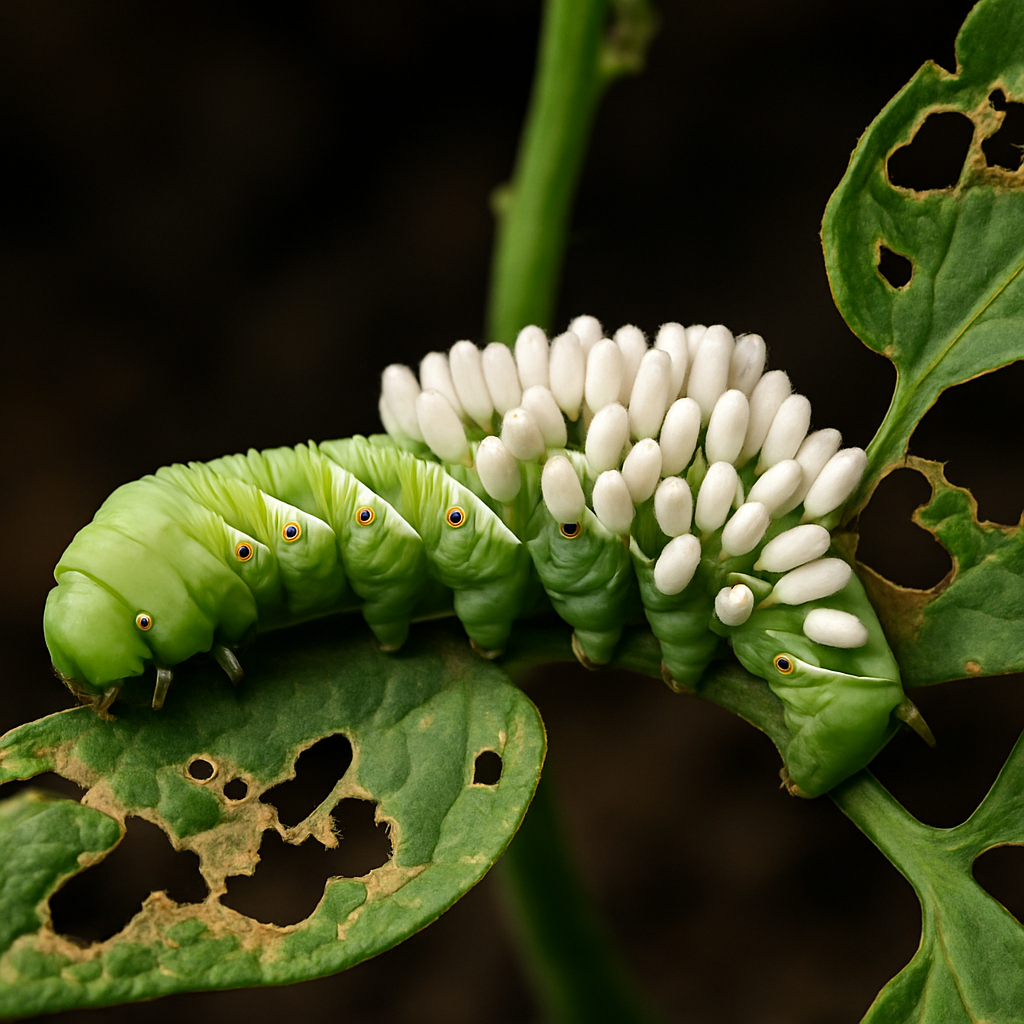
If you find a tomato hornworm covered in small white cocoons, you are witnessing a natural form of pest control. Those white projections are braconid wasp larvae cocoons, and their presence signals not only the hornworm's imminent demise but also potential relief for your tomato plants. Leaving a tomato hornworm with parasitic wasp eggs on its back is generally beneficial for your garden, as it interrupts the pest's life cycle and helps protect your plants from further damage.
Identifying Wasp Eggs on Hornworms and Early Signs of Infestation
Tomato hornworms and their close relatives, tobacco hornworms, are common caterpillars in vegetable gardens. One of the most noticeable signs of parasitism is the appearance of clustered, rice-shaped white cocoons on the hornworm's back. These are not actually eggs, but the cocoons of wasp larvae.
Spotting these larvae often follows a period of intense feeding by the caterpillar. You might notice large, irregular holes in leaves, stems that have been chewed through, or clusters of green-black droppings (feces) beneath the damaged foliage.
Most gardeners identify an infestation by these visible markers, along with signs such as wilting plants, stripped stems, and defoliated sections. The hornworm’s appearance— its characteristic green color, diagonal white stripes, and false eyespots— makes it distinguishable from other leaf-feeding pests. For more first-hand identification tips, see this Facebook gardening discussion.
While many worry about the danger to their plants, the emergence of wasp cocoons is a positive sign that natural predators are active in your garden ecosystem.
Lifecycle of Parasitic Braconid Wasps and Their Impact on Hornworms
Braconid wasps target large caterpillars like tomato hornworms and tobacco hornworms by laying eggs inside their bodies. As the wasp larvae hatch, they feed on the hornworm’s internal tissues, ultimately killing the pest before it can pupate into a moth.
The larvae eventually chew out through the hornworm’s skin and spin white pupal cocoons on its back. These cocoons are often mistaken for white eggs, but they mark the stage at which the hornworm will soon die.
During this process, the hornworm largely stops eating, minimizing further damage to your tomato plants. The parasitized caterpillar becomes lethargic and less destructive, making it less of a threat to your garden.
Natural Predators and Protection for Tomato Plants
Parasitic wasps are one of the most important natural controls for hornworm populations. Their role in the garden is essential for maintaining balance without chemical intervention. According to sources like the Buckeye Yard and Garden Line, these wasps can substantially reduce hornworm outbreaks.
Other predators, including birds, predatory beetles, and even some spiders, also target hornworms at various life stages. Encouraging beneficial insects can create a protective buffer for your garden over time.
Gardeners often wonder if it is safe to remove parasitized hornworms. The answer is to let them be, allowing the wasp larvae to complete their development. This increases the population of beneficial predators and protects your tomatoes from recurring infestations.
Understanding Hornworm Damage: Feces, Feeding, and Leaf Loss
Hornworms cause rapid, severe defoliation on tomato and tobacco plants by eating leaves, sometimes stems and green fruit. Heavy feeding can strip plants nearly bare if not managed, leading to reduced yields and weakened plants.
A reliable sign of an active infestation is the presence of large, pellet-like droppings on the soil or lower leaves. These feces indicate that caterpillars have been feeding overhead.
Recognizing hornworm diet and feeding preferences helps guide inspection and control. They prefer the most tender parts of the plant, such as younger leaves and stems, which is why close monitoring in mid- to late-summer is advised.
Spotting holes, chewed edges, and leftover droppings are key clues to early detection, allowing you to intervene before major damage is done.
Natural Methods and Integrated Pest Management
Braconid wasps are an indispensable tool in biological and integrated pest management strategies. They provide an effective, pesticide-free solution that can be complemented by manual removal of unaffected hornworms and the use of floating row covers to prevent new infestations.
Some gardeners employ homemade repellents, but these can disrupt helpful insect populations. It is always preferable to encourage natural control whenever possible.
Leaving hornworms that are infested with wasp cocoons will foster ongoing population control and may reduce future infestations, as the emerging adult wasps seek new hosts in subsequent generations.
Visual Cues: Recognizing Infested vs. Healthy Hornworms
Healthy hornworms are often plump, active, and bright green with distinctive white lines and a notable horn at the rear. In contrast, infested caterpillars are less active, sometimes a duller blue-green, and covered in white, oval-shaped cocoons.
Turning brown, slow-moving hornworms are usually in decline, often as a result of heavy parasitism or advanced age. Since the larvae of braconid wasps grow inside the caterpillar, sometimes you can observe them poking out just before pupation.
To learn more about recognizing these visual distinctions, you can consult images and further discussions on gardening forums such as this Reddit post.
Monitoring for these signs and removing only healthy (non-parasitized) hornworms is the most sustainable approach.
Long-Term Plant Protection and Garden Health
Utilizing the parasitism of hornworms is a cornerstone of natural garden pest control. Allowing wasps to complete their lifecycle on hornworms supports sustainable gardening and minimizes dependence on synthetic pesticides or homemade killers.
Encouraging host plants for beneficial insects, providing shelter, and minimizing broad-spectrum insecticide use all foster a balanced ecosystem. Keeping an eye out for the distinctive signs—such as white wasp cocoons, droppings, and chewed leaves—lets you intervene early and selectively.
By prioritizing natural controls like braconid wasps, you both protect your tomatoes and contribute to a resilient, biodiverse garden that can withstand infestations year after year.
Through observation, careful intervention, and support for helpful predators, your tomatoes can thrive while hornworm populations are kept in check naturally.
Comments
Post a Comment